
You wake up in the morning, swing your legs over the side of the bed, and take your first step—only to feel a sharp pain in your heel.
For a moment you might limp, wondering “why does my heel hurt when I walk first thing in the morning?” Then after a few minutes of moving around, it seems to loosen up and the pain fades slightly.
If this sounds familiar, you’re not alone.
This type of heel pain in the morning is one of the most common complaints we see at our clinic in South Granville, Vancouver, especially during the spring months when people begin walking, running, and spending more time outdoors again.
In many cases, the cause is plantar fasciitis, a very common condition affecting the foot. The good news? With the right assessment and treatment approach, most people recover well and can get back to their normal activities pain-free.
Plantar fasciitis occurs when the plantar fascia, a thick band of connective tissue along the bottom of your foot, becomes irritated or inflamed.
This tissue runs from your heel bone to your toes and plays a crucial role in supporting the arch of your foot when you walk, run, or stand.
When the plantar fascia is overloaded or repeatedly strained, tiny micro-tears can develop. Over time, this can lead to inflammation and stiffness, which is why many people experience heel pain when waking up or after periods of rest.
Common symptoms include:
Because it’s such a common issue, plantar fasciitis treatment is something physiotherapists, chiropractors, and massage therapists deal with regularly.
There isn’t always one single cause of plantar fasciitis. In most cases, it develops gradually due to repetitive stress on the foot.
Some of the most common factors we see in clients visiting our Vancouver clinic include:
Sudden increases in activity
Many people experience an abrupt increase in their walking, running, or outdoor activity in the spring and summer months.
Tight calf muscles
Limited ankle mobility can place extra strain on the plantar fascia.
Poor footwear
Shoes without proper support can contribute to running heel pain and walking discomfort. At Therapy X we work closely with retailers in the city who specialize in finding and fitting you in the right shoe for the unique needs of your body.
Standing for long periods
People who work on their feet often develop strain through the bottom of the foot.
Returning to running too quickly
Increasing mileage or intensity without gradual progression and a regiment protocol.
With the warmer weather approaching in Vancouver, many people begin training for races, hiking more, or spending longer days on their feet—which can trigger symptoms if the foot isn’t prepared for the load.
When people first notice foot pain when waking up, they often try to push through it or ignore it. Unfortunately, this can allow the condition to worsen.
Some of the most common mistakes include:
Ignoring the pain
Continuing to run or walk long distances without addressing the issue.
Walking barefoot on hard floors
This places extra strain on the plantar fascia.
Wearing worn-out running shoes or unsupportive footwear
Shoes lose their support over time and during the summer months, we see a lot of people come through our doors wearing sandals that offer little to no support for their feet. We get it, summer is sandal season! However, your feet are screaming out at you for more support whether that be through strengthening and/or accompanied supportive footwear.
Only stretching the foot and not the calf
The calf and plantar fascia work closely together.
Waiting too long to seek treatment
Early plantar fasciitis treatment can prevent the condition from becoming chronic. Early treatment can also fix the root cause of the issue faster before the condition becomes chronic and compensation from other areas of the body take place.
Targeted exercises are often a key part of treatment for plantar fasciitis. These movements help reduce tension in the plantar fascia and surrounding muscles.
1. Plantar fascia release
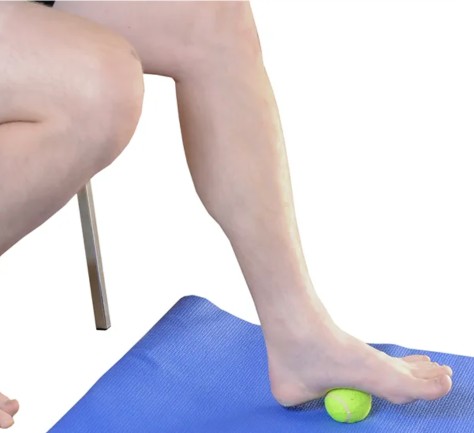
Roll the bottom of your foot over a lacrosse ball, tennis ball, or frozen water bottle. The iced water bottle can provide symptom relief for acute pain while self mobilizing the plantar fascia simultaneously. Find a sore spot, apply moderate pressure and roll back and forth over it to release the tension.
Do this for 2-3 minutes to release tension in the plantar fascia.
2. Calf Stretch (Straight Knee)
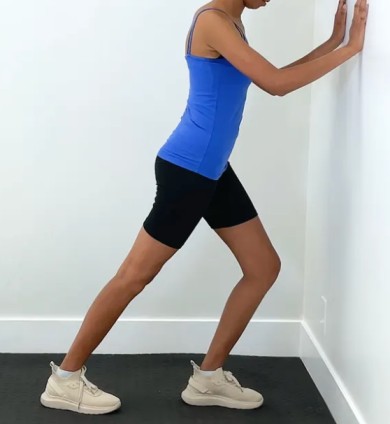
Stand facing a wall with one leg behind the other. Keep your back leg straight and heel on the ground while lunging into your front leg.
Hold for 20-30 seconds X 3.
This helps improve ankle mobility and reduce strain on the plantar fascia.
3. Calf Stretch (Bent Knee)
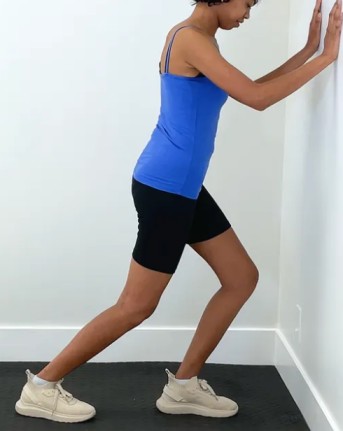
Stand facing a wall with one leg behind the other. Keep your back knee bent and heel on the ground while lunging into your front leg.
Hold for 20-30 seconds X 3.
This helps improve ankle mobility and reduce strain on the plantar fascia.
4. Plantar Fascia Stretch
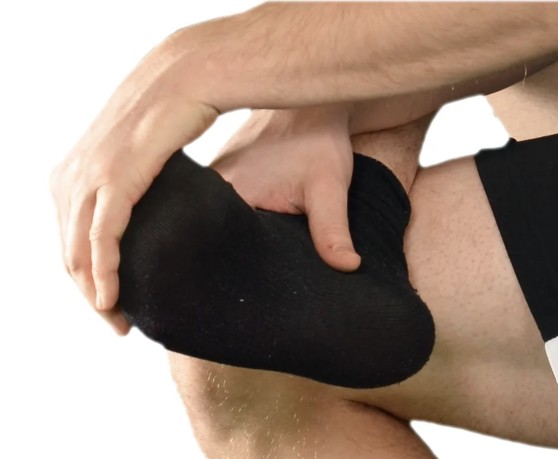
Sit down and cross one leg over the other.
Pull your toes back gently until you feel a stretch through the arch of your foot. Don’t forget to pull back your big toe as well.
Hold for 20–30 seconds X 3.
5. Arch Strengthening
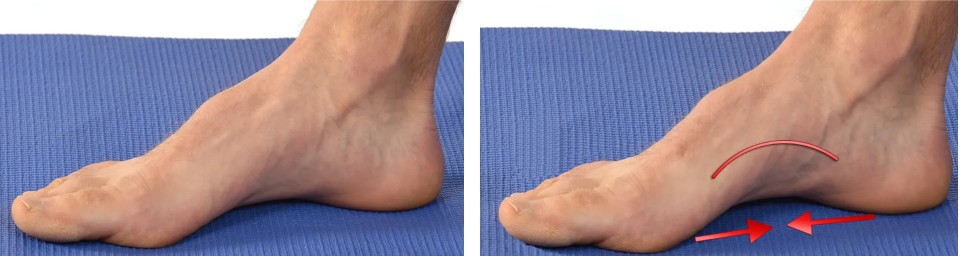
Sitting at the edge of your seat, pull the arch of your foot up to create a dome at the bottom of your foot. Try not to curl and grab with your toes. Think about shortening the distance from the ball of your foot to your heel and feel the bottom of your foot work.
To progress this exercise, perform this in standing.
A further progression would be to implement this into your activities, walking, running, etc.
Strengthening the small muscles in the foot can improve overall foot support and take the load off your plantar fascia.
These exercises are often included as part of a personalized plantar fasciitis corrective exercise program.
6. Ankle pumps with resistance
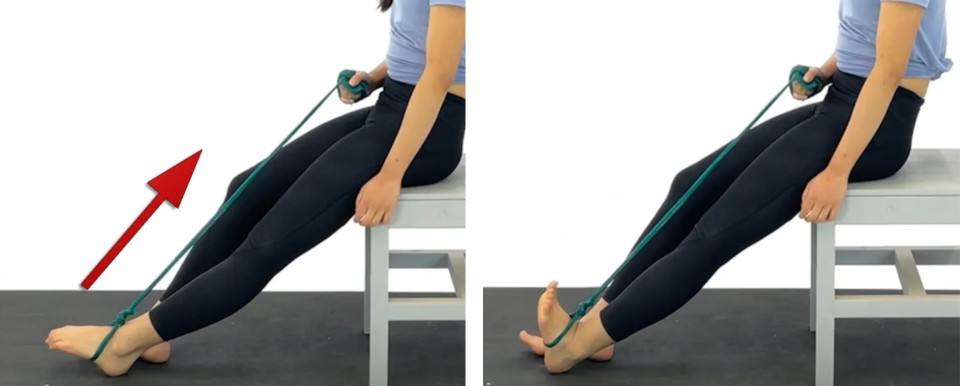
Before getting out of bed first thing in the morning and before standing up after you’ve been sitting for a while, do this exercise.
Hold either ends of a resistance band with the ball of your foot at mid length. Pull your toes back towards you, pause and feel the stretch in your calf and at the bottom of your foot. Then point your toes.
3 X 15 reps
This movement acts as a muscle pump to increase circulation and reduce stiffness to decrease the stabbing pain often felt upon the first few steps.
If your heel pain in the morning persists for more than 1–2 weeks, it’s a good idea to get assessed.
You should especially consider treatment if:
Early intervention can significantly shorten recovery time and prevent the condition from becoming chronic.
At our South Granville multidisciplinary clinic in Vancouver, we take a comprehensive approach to plantar fasciitis treatment.
Physiotherapy
Physiotherapy is typically the primary treatment for plantar fasciitis.
Your physiotherapist will:
Physiotherapy helps address the root cause, not just the symptoms.
Chiropractic Care
Chiropractic treatment can help restore proper alignment and mobility through the foot, ankle, and lower limb, improving how forces move through the body when walking or running.
Massage Therapy
Massage therapy can help reduce tension in the calves and surrounding tissues that contribute to plantar fascia strain.
Together, these therapies work to relieve pain, improve mobility, and help your body heal more effectively.
In some cases, additional treatments such as shockwave therapy for plantar fasciitis may also be recommended if symptoms persist.
If your heel hurts when you take your first steps in the morning, it’s a sign your body may need a little help recovering.
The good news is that plantar fasciitis responds very well to the right treatment approach.
With proper physiotherapy, chiropractic care, and massage therapy, most people can return to walking, running, and enjoying the outdoors without pain.
And with summer around the corner in Vancouver, now is the perfect time to address it before the hiking, running, and outdoor adventures begin.
If you’re experiencing heel pain or plantar fasciitis symptoms, our team in South Granville is here to help.
Book an assessment with one of our practitioners today and let’s create a treatment plan that gets you moving comfortably, enjoying the sunshine, and living pain-free this summer.
With Care,
Therapy X Collective